Deadly Clashes Erupt Between US-Backed SDF & US-Backed Syrian Army In Aleppo
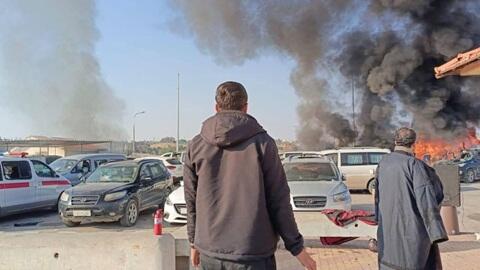
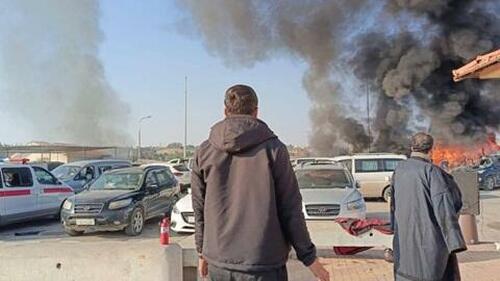
A new bout of deadly fighting has erupted between the US-backed Syrian Democratic Forces (SDF) and the Syrian military this week, coinciding with a top Turkish official’s visit to Syria and continued tension over a deal to integrate the Kurdish group into Damascus’s forces.
The clashes have calmed down, yet the situation remains volatile. Damascus claims it took steps to de-escalate the fighting. “The General Staff of the Syrian Arab Army issued an order to halt targeting of SDF fire sources in Aleppo after neutralizing several of them, narrowing the scope of clashes away from civilians,” the Syrian Defense Ministry said in a statement.
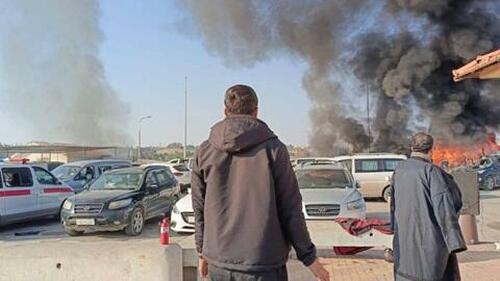
It said the army “stood up to its responsibilities in protecting and defending the people, without making any moves to alter control lines, limiting its actions to responding to sources of fire.”
Several people have been killed since early Monday morning. “The SDF carried out systematic attacks today in Aleppo, directly targeting densely populated residential neighborhoods and Al-Razi Hospital. The assaults resulted in the death of two civilians and injuries to others, including several civil defense volunteers,” the Syrian Interior Ministry announced late on Monday.
He described the escalation as “part of repeated attempts to undermine the 10 March agreement signed with the Syrian state.” The SDF has blamed the violence on the Syrian army.
“A checkpoint jointly manned by our forces and the [Damascus-affiliated] General Security Forces at the Al-Shihan roundabout in [northern] Aleppo came under an armed attack by factions affiliated with the interim defense ministry, leaving two of our personnel injured with varying degrees of wounds,” the SDF-affiliated Asayish security force said in a statement.
The SDF said in its own statement that the “attack carried out by factions affiliated with the defense ministry” is “a clear continuation of uncontrolled escalation that threatens the city’s security and civilian lives, and exposes the Damascus government’s inability to control its factions.”
The Kurdish group announced in a later update that the fighting had spread to the Kurdish-majority Aleppo neighborhoods of Ashrafieh and Sheikh Maqsoud. “Residents of the neighborhoods, along with the [Kurdish-led] Internal Security Forces [Asayish], continue to confront this aggression, taking all possible measures to protect themselves and civilian lives,” it said.
The Syrian Interior Ministry rejected the statement and said Kurdish forces stationed in the two neighborhoods were “treacherously” attacking Syrian positions at joint checkpoints run by both sides – in violation of “the agreements in place.”
Street clashes erupted between Syrian government forces and the Kurdish-led SDF in Aleppo, northwestern Syria. Two Syrian Internal Security personnel were wounded. The clashes come just days before the end of the March 10 agreement’s deadline between Damascus and the SDF. pic.twitter.com/yPekjObExd
— Ariel Oseran أريئل أوسيران (@ariel_oseran) December 22, 2025
The clashes coincided with a visit to Syria by Turkish Foreign Minister Hakan Fidan. “We have not seen any initiative or serious will on the part of the Syrian Democratic Forces [SDF] to implement the 10 March [integration] agreement. There has been systematic stalling by the SDF regarding the agreement,” Fidan said during a press conference with his Syrian counterpart Asaad al-Shaibani.
“The Syrian Defense Ministry recently presented a simple proposal to positively advance the integration process. [The SDF] responded [to the proposal] yesterday, and its response is currently under review,” Fidan added.
The Turkish foreign minister had threatened the SDF days earlier, saying that Ankara wanted a peaceful, negotiated settlement to the integration issue but warned that the “SDF should understand the patience of the relevant actors is running out.” Fidan added: “We do not want to see any need to resort to military means again.”
The SDF and the Syrian government reached an agreement in March to integrate the Kurdish group into Damascus’s forces. However, the two sides have been in disagreement about the deal’s implementation – particularly the SDF’s wish to remain under Kurdish command and enter the army as a bloc rather than dissolve and conscript, as Syria is demanding. As a result, clashes have intermittently broken out between the two sides over the past several months.
Damascus and the SDF have repeatedly accused each other of obstructing the agreement. Last month, the SDF accused the Syrian army and state-sponsored militias of facilitating the ISIS drone attacks on its positions.
The new proposal put forward by Damascus reportedly calls for incorporating the SDF’s roughly 50,000 fighters into Syrian security forces as three intact divisions and smaller brigades, rather than incorporating them as individuals – as the government previously demanded.
🇸🇾 – DEVELOPING: Syrian Army tanks open fire on SDF forces in Aleppo on live TV. The SDF, who were backed by the U.S. in the fight to defeat ISIS, were supposed to join the new Syrian national army led by Jolani, under a peace deal. That agreement has failed, and now heavy… pic.twitter.com/hWzyYNZbv8
— Belaaz News (@TheBelaaz) December 22, 2025
In exchange, the SDF would be required to give up some chains of command and allow Syrian army units to operate under what is now SDF territory in Syria’s oil-rich northern and eastern regions.
After the collapse of former Syrian president Bashar al-Assad’s government last year, the Hayat Tahrir al-Sham-led (HTS) Syrian Defense Ministry incorporated numerous extremist factions into its ranks – including those that once made up Turkiye’s Syrian National Army (SNA) proxy.
As a result, the new Syrian army is made up predominantly of ISIS and Al-Qaeda-linked factions with a long history of persecuting Kurds and other minorities.
The Turkish army has occupied Syria since 2016 and has carried out several major military operations against the SDF over the past decade. The US-backed Kurdish group is closely linked to Ankara’s sworn foe, the Kurdistan Workers Party (PKK), which entered into a historic peace process with Turkiye this year.
Tyler Durden
Tue, 12/23/2025 – 19:15